
There is a moment in every creative process — a quiet, electric one — when an idea stops living in your head and starts living in the world.
It doesn’t happen when you write the business plan. It doesn’t happen when you make the deck or build the spreadsheet or sketch the logo on a napkin. It happens when you hold something in your hands and think: this is it. This is what I meant to make.
That’s the prototype, and it is the single most important step in building anything — a business, a brand, a product, or a dream.
Two Prototypes. Two Very Different Builders. The Same Truth.
I want to show you two things I’ve been looking at lately that crystallized this idea for me.
Prototype #1: The Doggie High Chair
My daughter made this.
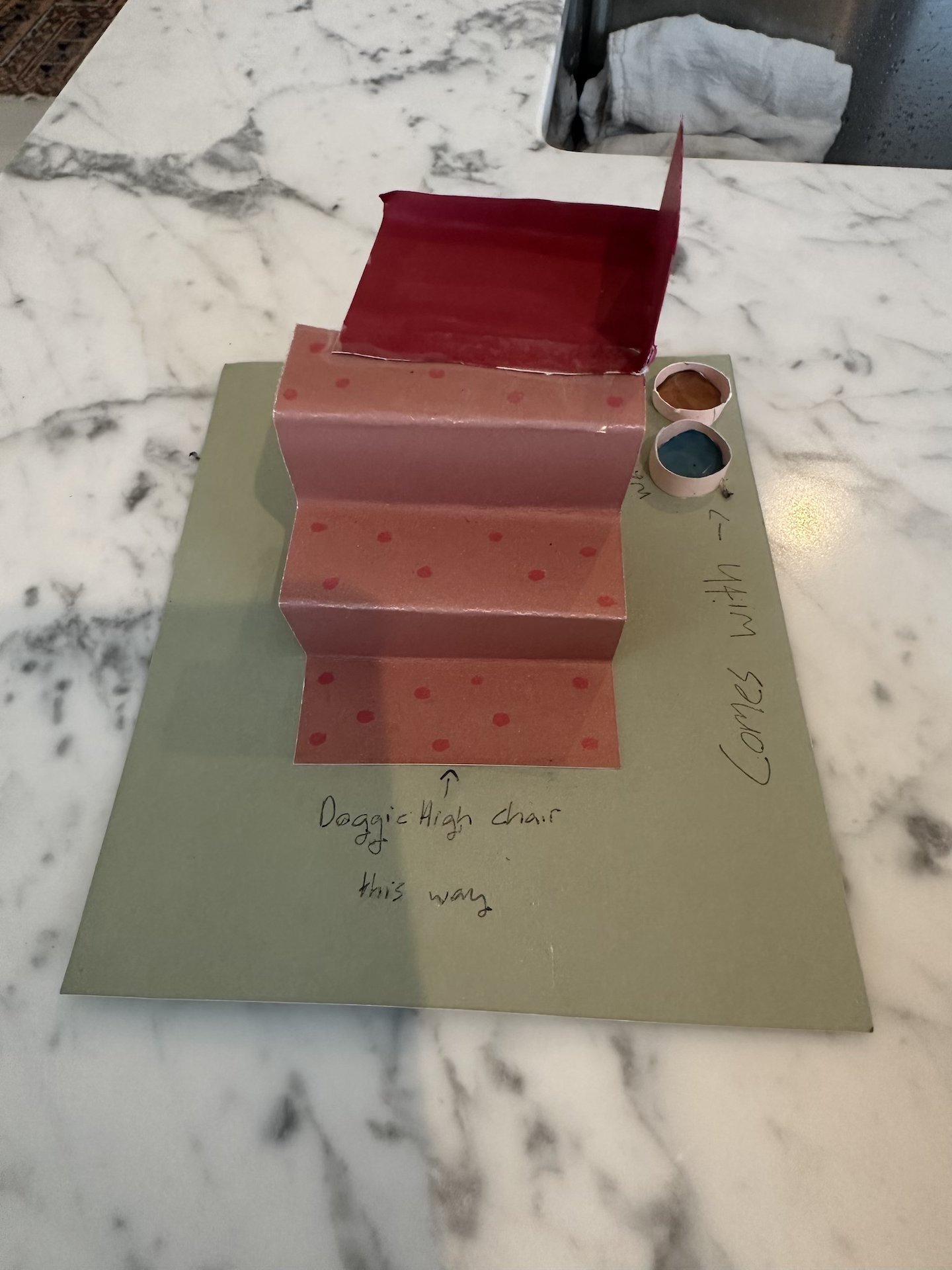
She folded and cut pink polka-dot paper into a three-tiered staircase structure with a backrest — a high chair for dogs, so they can sit at the table with the family during meals. She labeled it in her own handwriting: “Doggie High Chair — this way.” Then, on the second angle, she added: “Comes with →” and placed two tiny bowls next to it as accessories.
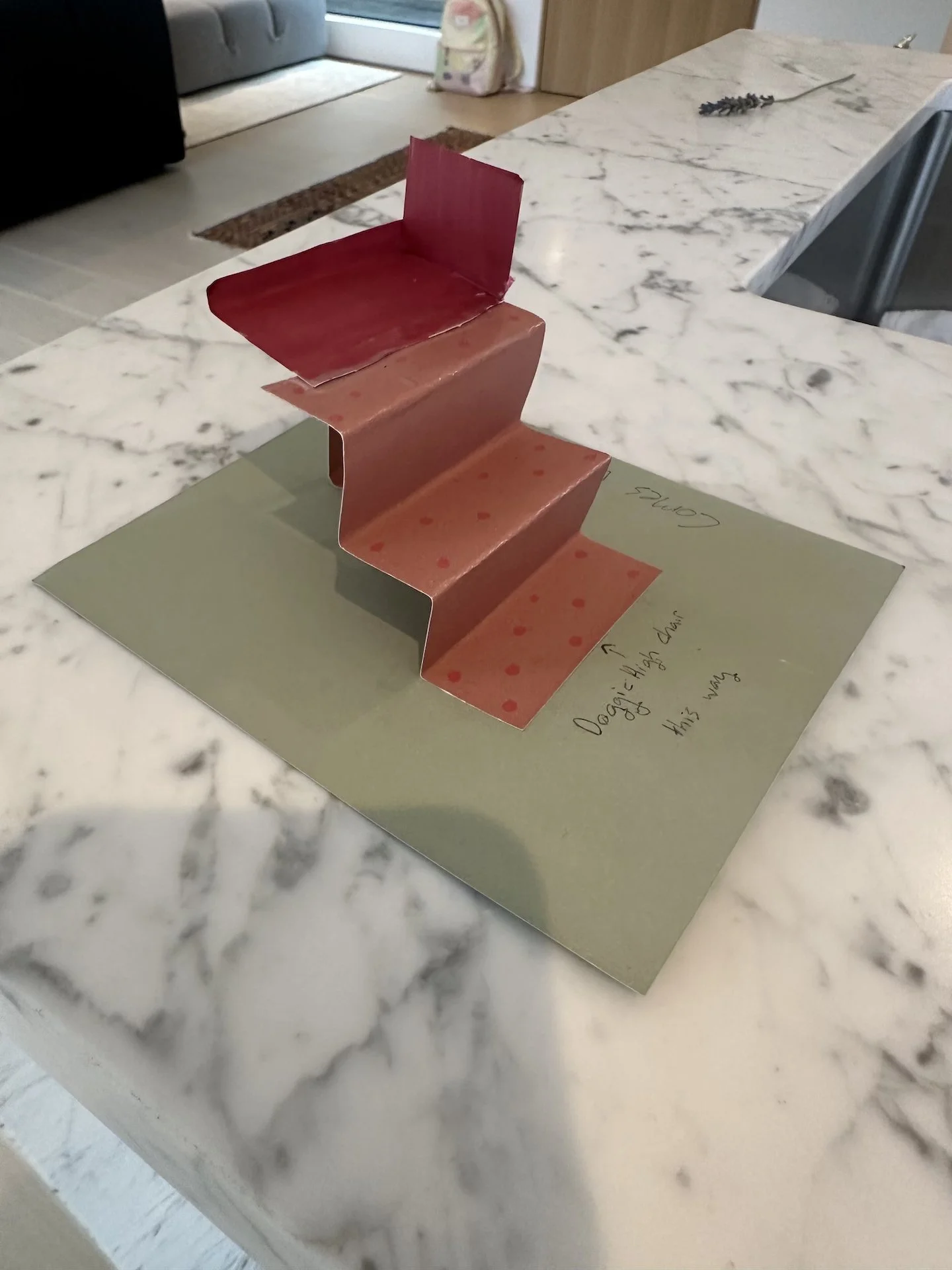
She didn’t just build a chair. She built a product. With a name, a directional cue, and a bundle. A kid, scissors, and paper — and she intuitively understood things that some grown founders spend months trying to figure out:
What does the product do? (Help your dog sit at the table with you)
What does the customer experience look like? (You approach it “this way”)
What comes in the box? (Bowls included)
Now — is the Doggie High Chair a $50M business? Could be, could not be. More important is she had an idea, and she made it real. She crossed the line from imagination to object. And once something is an object, it can be evaluated, refined, funded, manufactured, loved.
Before the prototype, it was just a thought. After the prototype, it was a thing that exists.
Prototype #2: Vandal Pop — Bubblegum Betrayal
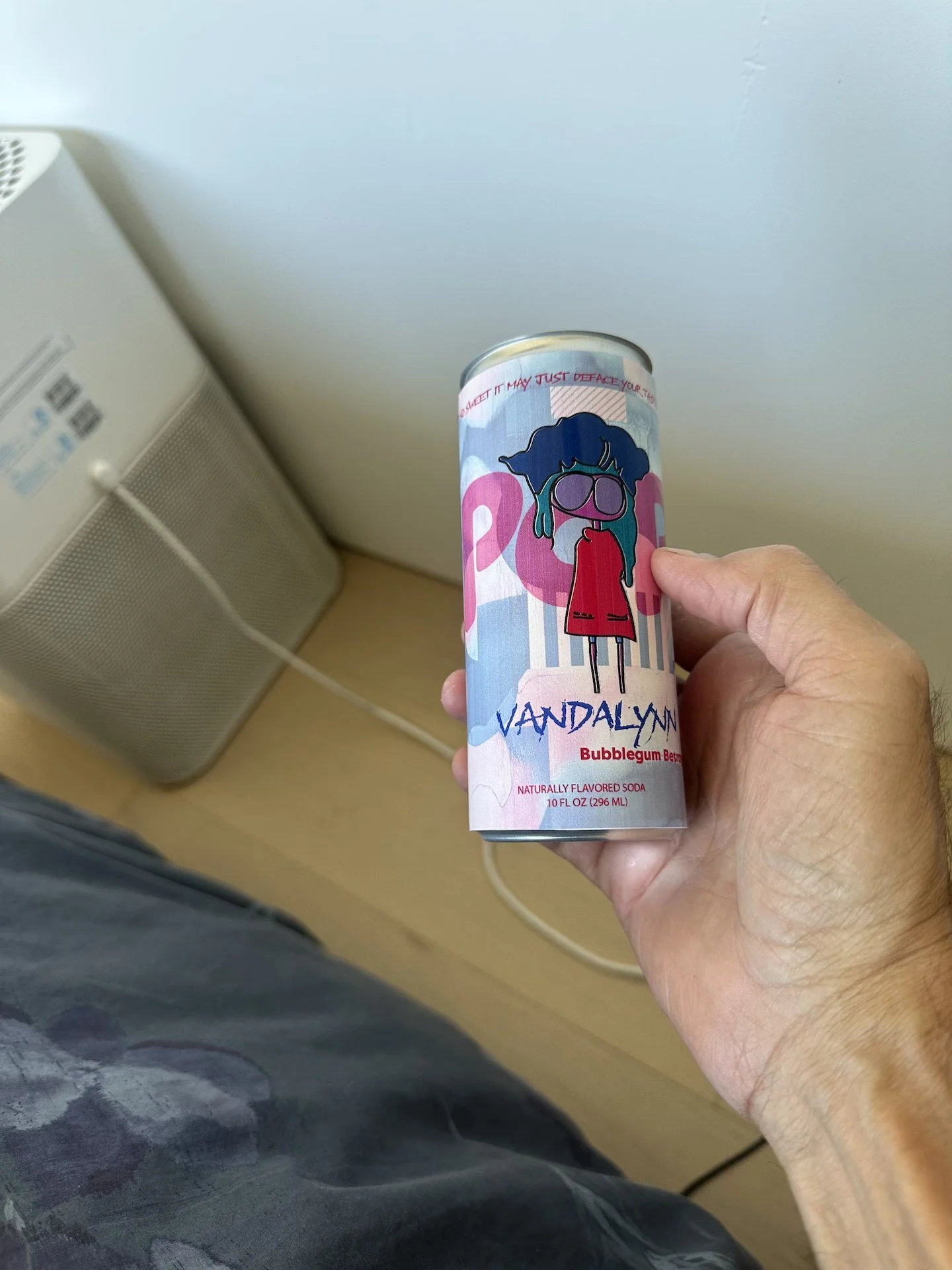
This is the first physical Vandal Pop can (5 more followed) — Bubblegum Betrayal, featuring the character Vandalynn: blue hair, oversized purple glasses, a red dress, standing in front of the bold pink “POP” wordmark.
The colorway is deliberate — soft blues, candy pinks, watercolor washes — built for a specific emotional register. The character is expressive, a little defiant, a little sweet. The name Bubblegum Betrayal creates tension: something familiar, turned sideways.
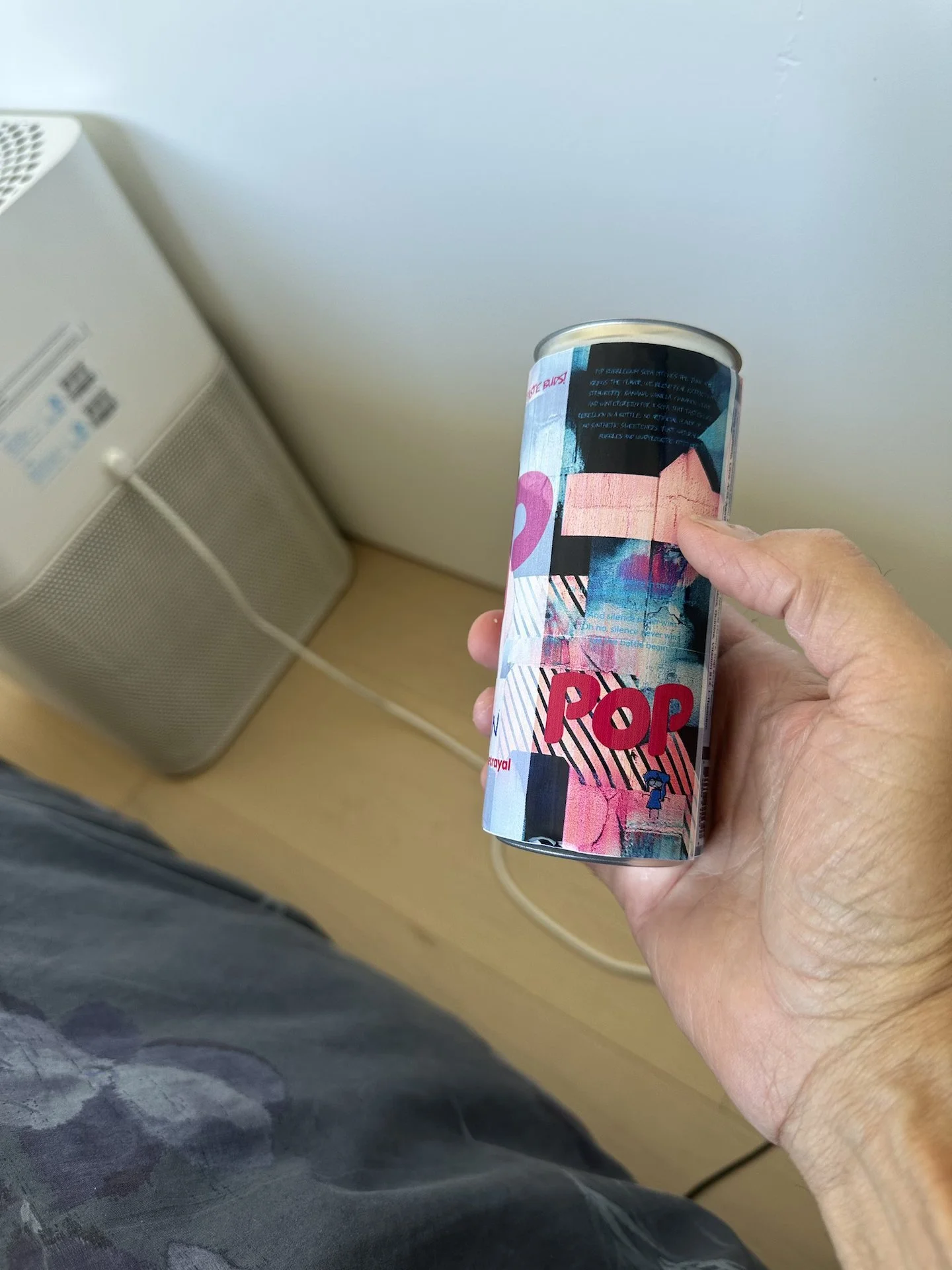
Flip it over and there’s a full nutrition facts panel, an ingredient list, a barcode, and TikTok, Spotify, and Instagram icons lined up at the bottom.
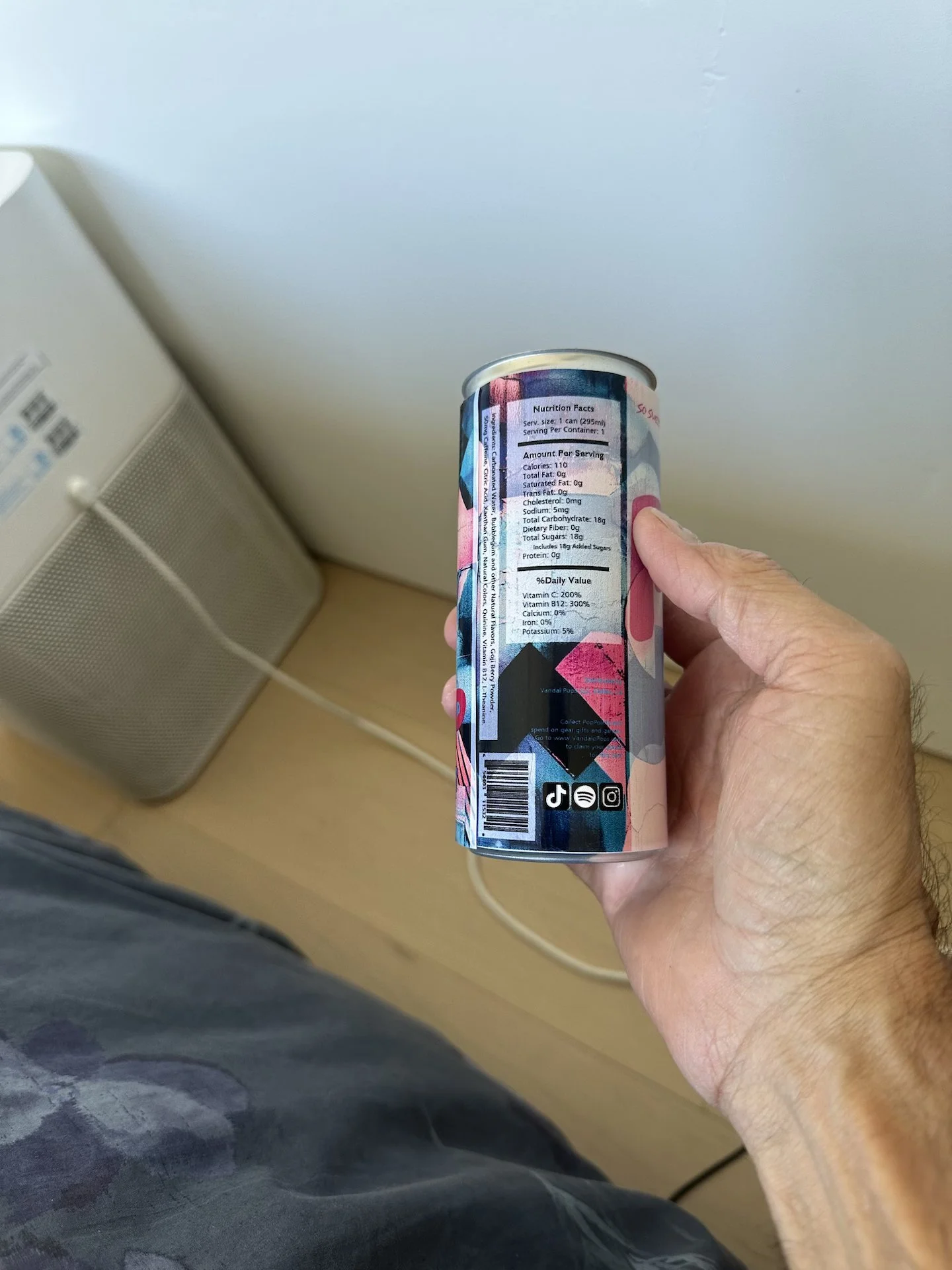
This wasn’t a mock-up on a screen. This was a physical, 10 fl oz can I held in my hand. And when I held it, everything about the brand — the name, the character universe, the flavor strategy, the retail ambition — clicked into place.
The prototype told me: this is real.
Why the Prototype Matters More Than the Plan.
Here’s what business culture gets wrong: we celebrate the pitch deck. We study the business plan. We ask for the financial model.
Those things matter. But none of them prove that an idea can survive contact with reality. The prototype does.
1. The prototype forces specificity. When an idea only exists in your head, it’s allowed to be vague. The color is “kind of pink.” The structure is “like a chair but elevated.” The prototype won’t accept vagueness. It demands decisions. What shade of pink? How many steps? How tall? Every decision you’re forced to make during prototyping is a decision you would have eventually had to make — except now you’re making it with something in front of you, which means you make it better.
2. The prototype creates conviction. There is a psychological transformation that happens when you hold your idea. Doubt is the default state of the builder. The prototype interrupts that cycle. You stop arguing with yourself about whether something is possible and start working on how to make it better. The Vandal Pop can didn’t eliminate the challenges ahead — permits, co-packers, retail buyers, distribution. But it changed the feeling in my chest when I thought about those challenges. It shifted from what if this doesn’t work to let’s figure out the next steps.
3. The prototype is the first pitch. Every investor, partner, retailer, or collaborator you will ever try to convince will respond to something real more than to something described. The Doggie High Chair prototype on a marble countertop is more compelling than a paragraph describing the concept. The Vandal Pop can in someone’s hand communicates the brand in three seconds — the character, the vibe, the market, the ambition — in a way that no deck page can replicate. The prototype speaks.
4. The prototype reveals what you don’t yet know. This is the most underrated function. When my daughter put the bowls next to her Doggie High Chair, she was solving a problem she discovered during the build: the dog needs somewhere to eat. That insight didn’t come from thinking about the product. It came from making it. The prototype will always teach you something the plan couldn’t.
The Physical Genesis.
I keep coming back to this phrase: the physical genesis of the idea.
Before the prototype, an idea is energy. It moves fast, it’s hard to grab, it changes shape depending on your mood. After the prototype, it’s mass. It has weight and dimension and a specific relationship with gravity. You can put it on a table. You can photograph it. You can hand it to someone and watch their face.
That transition — from energy to mass — is what the prototype represents. It is the moment an idea stops being something you imagine and becomes something you build. And everything that comes after — the company, the funding, the product line, the retail launch, the licensing deal — is downstream of that moment.
My daughter understood this, the way kids sometimes understand the most important things without needing anyone to explain it to them. She had an idea. She got some paper. She made the thing.
That’s it. That’s the whole lesson. Make the thing. Even badly. Especially badly, the first time. That’s where the magic starts.
Temil is the dad behind the daughter of Vandal Pop, a craft soda brand built around original characters and flavors designed for the next generation. He writes about brand building, creative process, and what it actually takes to build something from scratch.